
Introduction: The Unseen Effects of Everyday Medicine
We often take medications to solve a specific problem—to lower blood pressure, manage pain, or treat an infection. We trust them to do their job, but we rarely consider their other, unseen effects on our body’s intricate chemistry. While these medicines are often essential for health, they function by intentionally disrupting specific biochemical pathways. This process, however, can lead to unintended consequences, including the depletion of vital nutrients and other impacts on a cellular level.
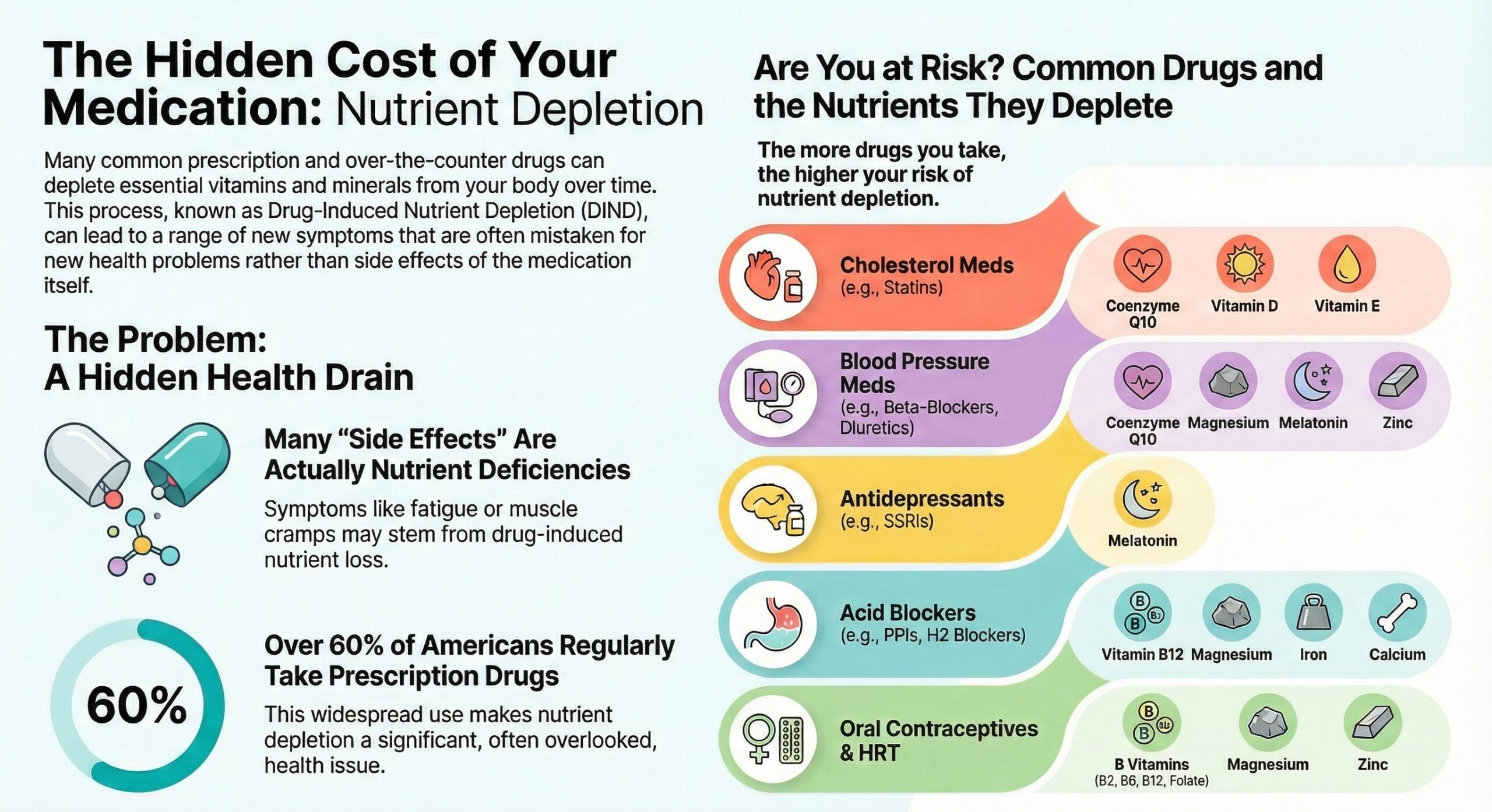
As the Riordan Clinic notes, this is a critical aspect of medication use that deserves more attention:
Prescription medications work to alleviate symptoms because they disrupt certain biochemical pathways. However, do we take the time to consider what other effects they are having on us? By shutting down a biochemical pathway, you could be having an impact on the utilization of certain nutrients.
——————————————————————————–
The List: 5 Counter-intuitive Takeaways
1. Your Cholesterol or Blood Pressure Pills Might Be Sapping Your Cellular Energy
Some of the most commonly prescribed drugs for heart health, including statins and beta-blockers, can deplete crucial compounds for cellular energy production and physiological balance.
- Statin Drugs (e.g., Lipitor, Crestor, Zocor): Used for lowering cholesterol, these medications are known to deplete Coenzyme Q10.
- Beta Blocking Drugs (e.g., Atenolol, Lopressor, Metoprolol): Prescribed for high blood pressure, this class of drugs depletes Coenzyme Q10, Chromium, and Melatonin.
This is significant because CoQ10 is directly linked to the function of our mitochondria—the powerhouses of our cells. Research shows that statins are linked to reduced mitochondrial CoQ10 levels, providing a clear mechanism for how these drugs can impact cellular energy. The depletion of Melatonin by blood pressure medication is also a powerful example of an unintended consequence, potentially affecting the sleep cycles of the very patients being treated. This depletion of CoQ10 isn’t unique to heart medications; as we’ll see, this vital compound for cellular energy is impacted by several other common drug classes, making it a particularly vulnerable nutrient.
2. Common Antidepressants Can Affect Key Nutrients for Mood and Sleep
The very medications prescribed to stabilize mood can paradoxically deplete the specific nutrients your brain requires for healthy sleep and neurological function.
- SSRIs (e.g., Prozac, Zoloft): This popular class of antidepressants can deplete Sodium, Folic Acid, and Melatonin.
- Tricyclic Antidepressants (e.g., Elavil, Tofranil): These medications can deplete Coenzyme Q10 and Vitamin B2.
The nature of these depletions is profoundly counter-intuitive. A medication taken to manage anxiety or depression might simultaneously reduce the body’s levels of Melatonin, a key compound for regulating restorative sleep, or deplete B-vitamins like B2 and Folic Acid, which are themselves vital for optimal neurological function.
3. Even Over-the-Counter Pain Relievers Have a Nutritional Cost
This issue is not limited to prescription drugs. Common, everyday pain and inflammation relievers that are available in any pharmacy also have a nutritional impact that is often overlooked.
- NSAIDs (e.g., Ibuprofen, Naproxen): Deplete Folic Acid, Iron, and Vitamin C.
- Acetaminophen (e.g., Tylenol): Depletes Coenzyme Q10 and Glutathione.
- Aspirin: Depletes Folic Acid, Vitamin C, Iron, Potassium, and Zinc.
Considering millions of people take drugs like Ibuprofen daily for chronic conditions like arthritis, the potential for long-term depletion of nutrients essential for tissue repair (Vitamin C) and oxygen transport (Iron) is a significant, yet rarely discussed, public health consideration.
4. Your Heartburn or Diabetes Medication Could Be Impacting B-Vitamin Levels
Two extremely common classes of medication—Proton Pump Inhibitors for acid reflux and Metformin for diabetes—can impact the body’s absorption and availability of essential B-vitamins.
- Proton Pump Inhibitors (e.g., Prilosec, Nexium): Used for GERD, these drugs can deplete Beta-carotene, B1, B12, Folic Acid, Calcium, and Zinc.
- Anti-diabetic drugs (e.g., Metformin, Glucophage): Can deplete Folic Acid, B12, and CoQ10.
This is especially concerning for diabetic patients taking Metformin, as diabetic neuropathy (nerve damage) is a common complication of the disease. The depletion of B12 and Folic Acid—nutrients critical for nerve health—by the very drug used to manage blood sugar highlights a complex biochemical trade-off that patients and doctors should be aware of.
5. A Surprising Number of Drugs Target Your Cellular Powerhouses
Beyond depleting specific nutrients, a wide array of drug classes can directly interfere with mitochondrial function. The mitochondria are central to producing the energy that every cell in your body needs to survive and function.
This effect is seen across many different types of medications:
- Antibiotics (e.g., Tetracyclines) may inhibit mitochondrial protein synthesis.
- Antivirals (e.g., Zidovudine) can induce mitochondrial toxicity.
- NSAIDs (e.g., Ibuprofen) can impact mitochondrial respiration.
- Cancer Treatments (e.g., Doxorubicin) may cause oxidative stress and mitochondrial dysfunction.
This focus on mitochondria is the key that unlocks the entire puzzle. The depletion of CoQ10 by statins, antidepressants, and metformin isn’t just a random side effect; it’s a direct blow to mitochondrial function, as CoQ10 is an essential component of the cell’s energy-producing machinery. Therefore, many of the seemingly disconnected nutrient depletions discussed earlier are, in fact, different paths leading to the same destination: compromised cellular energy.
——————————————————————————–
Conclusion: A More Informed Approach to Your Health
The core message is that many necessary medications have broader biochemical effects than we might realize, including nutrient depletion and mitochondrial impact. This information is not meant to cause alarm but to foster awareness. Understanding these unseen effects empowers you to take a more comprehensive view of your health.
Knowing this, how can we open a more proactive conversation with our healthcare providers about supporting our body’s nutritional needs while benefiting from essential medicines?
Resources: https://riordanclinic.org/wp-content/uploads/2019/04/Medication-Induced-Nutrient-Depletion.pdf